

Celiac Disease
Find out if you are affected
What is Celiac Disease?
Celiac Disease is a hereditary intestinal disease.
Intestinal mucosal damage, and even immune disorders, can be complicated by many different symptoms, increasing the risk of developing other autoimmune diseases!
Hardly Noticeable!
Those diagnosed with celiac disease are like only the tip of the iceberg.
Many people are suffering from damaged intestine mucosal,
however since the symptoms are not obvious, they do not know they are being affected!

Intrinsic factor:genetics


+
Protein of gluten damage the intestine mucosa
Appearance of typical intestinal symptoms and malabsorption
Concurrent with other symptoms and increase the risk of other autoimmune diseases

Extrinsic factor:
presence of gluten
Symptoms of Celiac Disease

Source: American Society of Gastroenterology
What are gluten and gliadin?
Gluten is a general name for the proteins found in wheat (varieties of wheat include: durum, emmer, spelt, farina, farro, kamut and einkorn), rye, barley and triticale.
Gliadin is one of the main protein components in gluten. The test is used to help find out whether you have celiac disease, an autoimmune disease by looking at the reaction to Gliadin.
Why we need to choose blood test?
Research studies have shown that the combination of tTG and DGP
can detect nearly all biopsy proven celiac patients.
According to American Gastroenterological Association (AGA), blood test is a less invasive and easier method, compared to upper endoscopy and intestinal biopsy. It reduces discomfort and lesions caused by these invasive methods.
HK BioTek Technology Competency
• Each sample will be tested in duplicate to ensure quality
• US Food and Drug Administration (FDA)-approved INOVA QUANTA Flash® CIA immunoassay technology with high sensitivity and specificity
• CIA significantly increases the analytical measuring range, allowing the practitioner to monitor gluten-free diet compliance
Test Items


The Testing Process


User Testimonials
Before Deciding on a Gluten Free Diet
Gastroenterologist, Hong Kong
“This test covers almost everything I want to see when I suspect a patient may have celiac disease, before asking them going for a gluten free diet.”
IgG positive
Nutritionist, Hong Kong
“When patient is found to be IgG positive to wheat and suffering from celiac-like symptoms, I order this test to screen if the patient is a celiac. This is very helpful as the result tells if the patient needs to avoid gluten just a period of time or in the lifetime.”
Just Gluten-Intolerant
Mr. JF, Hong Kong
“Going gluten-free is a trend in Hong Kong and USA. I do feel better after cutting gluten in my diet, yet I still want to confirm if I am a celiac, this’s why I ordered this test. The result has shown that I am just gluten-intolerant but not a celiac.”
Frequently-Asked Questions
1. What are the benefits of the Celiac Screening?
• Report shows exact values for four markers (IgA-and IgG-tTG, IgA-and IgG-DGP) and a reference value will be provided.
• A small amount of blood via blood drawing is required
• Analysis completed in the U.S.
• Comprehensive supporting information in client information sheets
2. Why shall I choose blood test for Celiac Disease?
Blood test is a very convenient and less invasive method, compared to upper endoscopy and intestinal biopsy. Using blood test can reduce the discomfort and lesions caused by those invasive methods. IgA-and IgG-tTG, IgA-and IgA-DGP tests constitute valuable diagnostic tools in the decision for more invasive intestinal biopsy. Also, they have proven their value of for the follow-up of CD and have revealed the high prevalence of undiagnosed CD. Therefore, scientific journals and medical organizations suggest that rather than ordering invasive testing, it is far better to start with serological testing on some reliable markers and follow up as necessary
3. Can the Celiac Screening test provide accurate and reliable test results?
HK BioTek Celiac Disease screening tests via blood. IgA and IgG against tTG (anti-tissue transgluaminase antibody), and IgA and IgG against DGP (anti-deamidated gliadin peptide antibody) levels in blood are assessed by Chemiluminescent Immunosorbent Assays (CIA).The results indicate either positive or negative in each analyte. In combination with other clinical observations, they provide you and healthcare professionals some reference data so as to find out more about your condition. A diet change that eliminates gluten-containing foods can result in total recovery of damaged intestine of individuals diagnosed with celiac disease.
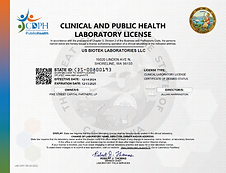
Samples will be sent to US BioTek Labs for analysis. Each sample will be test in duplicate as quality assurance. US BioTek Laboratories is an independent clinical laboratory approved by CLIA (US Clinical Laboratory Improvement Amendments), and the accreditation from CAP (College of American Pathologists). CAP accreditation, with the authority granted by the Centres for Medicare Medicaid Services (CMS) within the United States Department of Health and Human Services, helps to maintain accuracy of test results, meet required standard from CLIA, FDA and OSHA: where excellence in patient safety, laboratory management, staff competency, procedures and processes, equipment and facilities and record keeping.



.png)
.png)
.png)
.png)
.png)
.png)
Search for the latest News of HK BioTek